
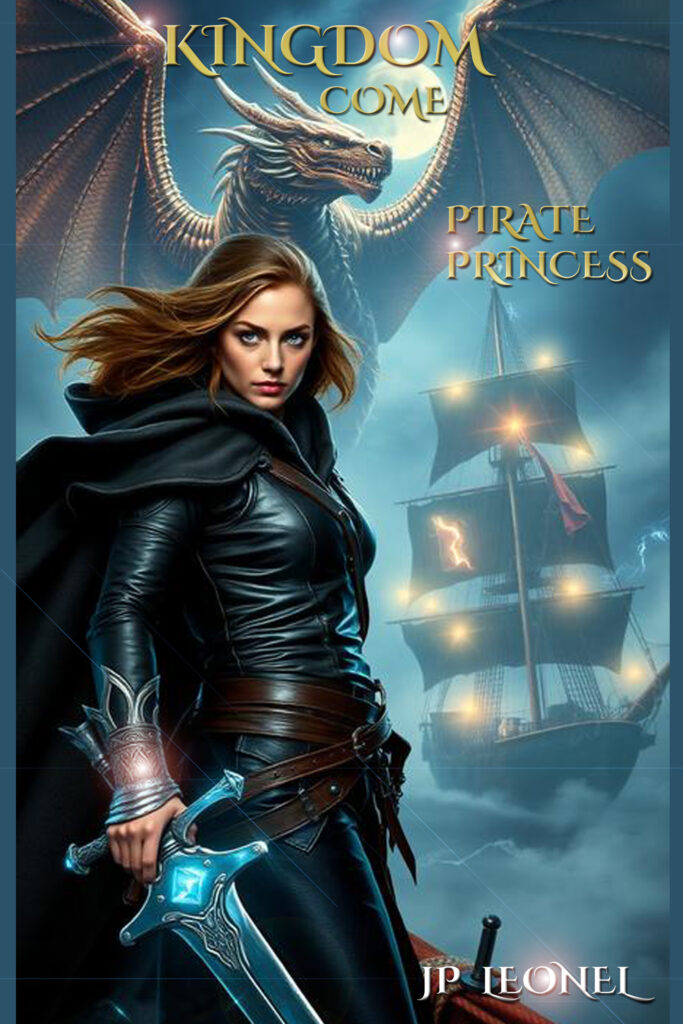
KINGDOM COME
An Allegory by JP Leonel
In Kingdom Come, JP Leonel weaves a sweeping allegory of light and shadow, faith, and rebellion, echoing the timeless spirit of J.R.R. Tolkien and C.S. Lewis. Through vivid imagery, profound symbolism, and living myth, the tale unveils a world that mirrors the eternal conflict between the Kingdom of Heaven and the powers that oppose it.
The story begins in Eldoria, a realm of immortal beauty and divine craftsmanship. A vision of what humanity once was before the Fall. Its people, the Eldorians, live in harmony with creation, bound to both nature and spirit, serving as the Firstborn stewards of a world shaped by sacred design. Yet even in this radiant land, pride has begun to stir, and ancient darkness whispers again through forgotten corridors of power.
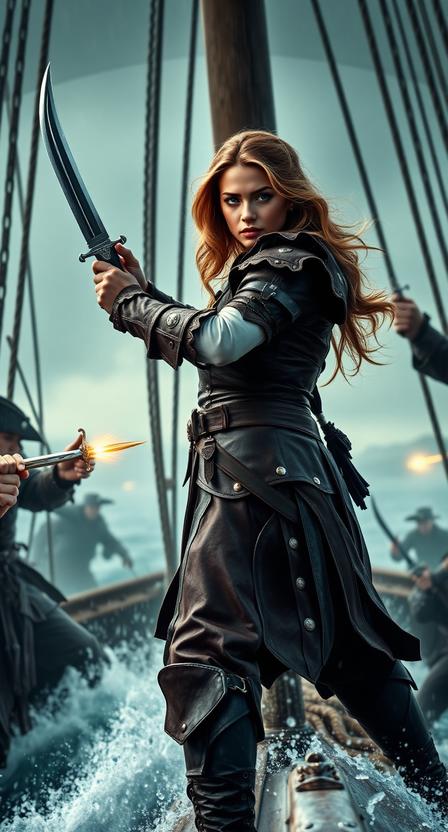
Into this balance is born Elara, a child marked by prophecy and mystery. From her first breath, it foretold that she would walk between the worlds of the immortal and the mortal. Through her, destiny will arise. Raised among dragons and dreamers, she grows into a woman who carries both fierce strength and quiet grace. When shadows rise and the seas burn with Malrik’s corruption, Elara, who was banished from her kingdom, is called to lead the crew of the Ardentis, a vessel forged not merely for voyage, but for war against the unseen.
At her side stands Lys, a captain torn between duty and faith, courage, and doubt. Together, they recruit a company of wanderers, exiles, and believers. They are a remnant bound by saltwater vows and the hope of redemption. Through storms, battles, and the fire of testing, they learn that true strength is not in the sword, but in the soul that refuses despair.
Their quest leads them through haunted ports, forgotten isles, and the deepest Abyss, where a dragon once pure now lies corrupted by Malrik’s deceit. Each relic they seek, each trial they endure, brings them closer to the final revelation. The war for Eldoria is not of steel and flame alone, but of belief. It is the war between kingdoms unseen.
In the tradition of classic Christian allegory, Kingdom Come speaks to the eternal themes of calling, sacrifice, and restoration. Every realm mirrors the heart of man. Every shadow hints at a greater light. JP Leonel writes not merely a fantasy epic, but a parable wrapped in wonder. It serves as a lens, allowing readers to perceive the True Kingdom that has been ever-present and awaits revelation.
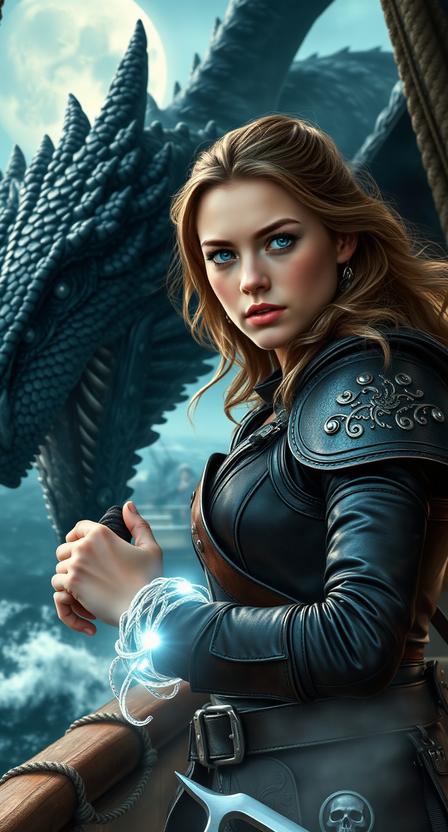
When I first began Kingdom Come, I did not set out to write another tale of swords and seas. I set out to write about the unseen, quiet, and eternal war that moves beneath the surface of every heart. This story is an allegory, not of one world long lost, but of the Kingdom that still draws near.
Like the great works of Tolkien and Lewis, this story speaks in symbols and shadows. The Eldorians represent what mankind once was. They were pure, unbroken, and close to the Creator. Elara’s journey mirrors the calling placed upon every soul. That calling is to walk through darkness without surrendering the light. The Ardentis is the vessel of faith, fragile yet unyielding, held together by the courage of those who dare to believe. And the dragons, both noble and fallen, reflect the immense power of creation. The power is either redeemed for glory or corrupted by pride.
Every realm within this book, every whisper of prophecy, every battle waged beneath the heavens, reflects one truth. The Kingdom of God is not far away. It lives in the courage of the faithful, the mercy of the forgiven, and the hope of those who stand against the night.
May this story remind you that though darkness rises and kingdoms fall, there is a greater Kingdom. The Kingdom that cannot be shaken, for its throne is eternal and its light cannot die.
— JP Leonel
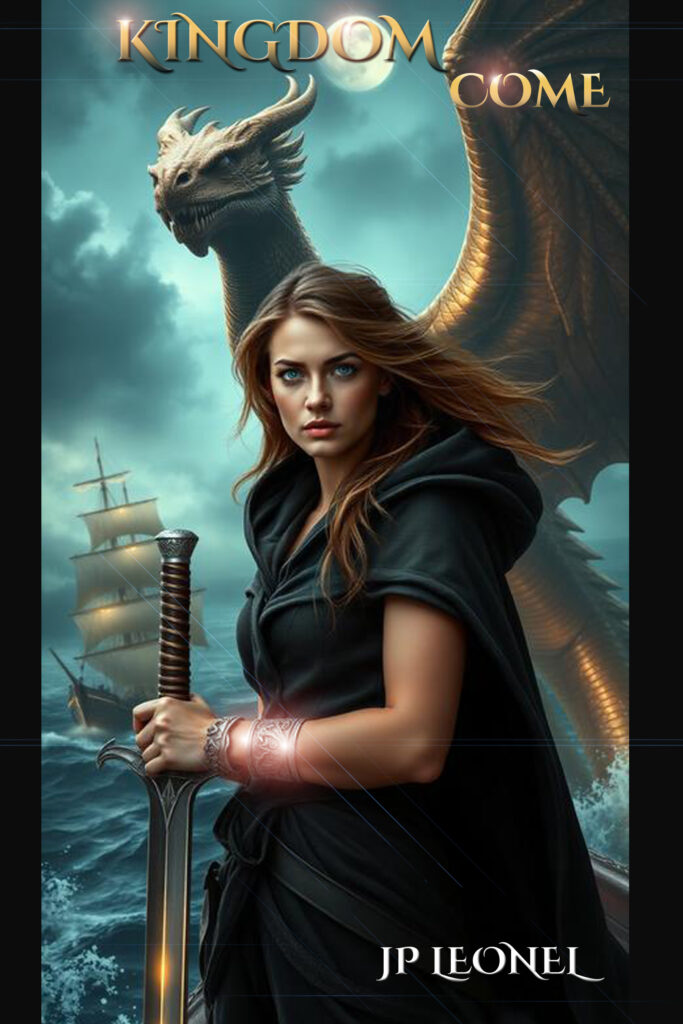
Structure & Organization
Supporting Crew: Mira, Kael, Fen, and others represent various facets of humanity— courage, doubt, loyalty, and the capacity for redemption Format: The document is a full-length fantasy novel, divided into a prologue, thirteen chapters, and an epilogue. Each chapter contains named subchapters, and the book opens with a Table of Contents, summary, author’s note, dedication, and epigraph.
Allegory & Faith
The novel is a Christian allegory, echoing the works of Tolkien and C.S. Lewis. It explores the eternal conflict between light and darkness, faith and rebellion, and the restoration of a fallen kingdom as a metaphor for spiritual redemption.
Elara’s journey is one of self-discovery, grappling with her heritage, calling, and the burden of leadership. Her exile and return mirror the spiritual journey from separation to restoration.
Trust, Loyalty, and Sacrifice The narrative repeatedly tests the bonds between characters, emphasizing that true strength lies in trust, loyalty, and sacrificial love rather than power or violence.

Light vs. Shadow
Eldoria: A lost paradise, reminiscent of Eden, guarded by dragons and marked by divine craftsmanship. Its fall and potential restoration parallel the biblical narrative of creation, fall, and redemption.
Dragons: Symbolize both the power of creation and the danger of pride. Emberis, the dragon bonded to Elara, represents the possibility of redemption and the strength found in relationship.
Imagery: Vivid descriptions of sea, storm, fire, and light create a rich, immersive atmosphere. Dialogue: Used to reveal character motivations, deepen relationships, and convey philosophical and theological ideas. Target Audience: Readers of Christian fantasy, fans of Tolkien and Lewis, and those interested in allegorical storytelling. Rich Allegory: Deep spiritual symbolism without sacrificing narrative momentum.
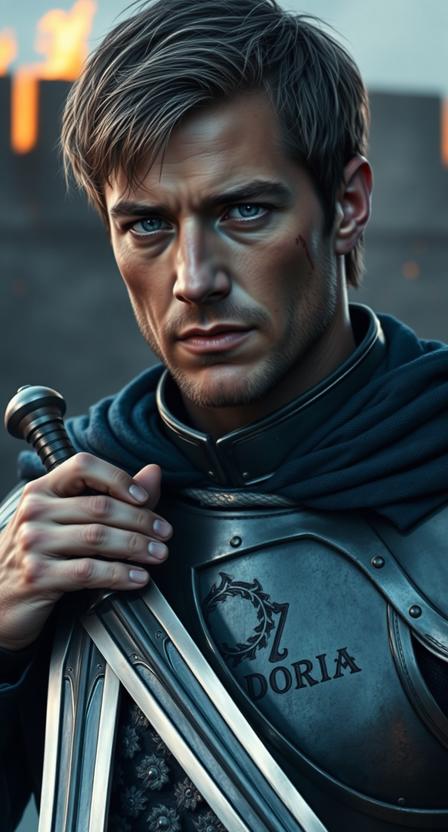
Core Trait: Loyal but hardened
He survives because he never stops moving forward. He is practical, terse, observant, and shaped by a difficult past.
Lys is grounded and direct.
A former soldier who lost his unit.
He carries survivor’s guilt and hates careless leadership. He gets frustrated with indecision A calm tone even in chaos
He fights because he believes Elara deserves to live, even if he does not.
He fights to erase a past mistake.
He fights because he refuses to kneel to tyrants ever again.
Flaws that Humanize Him He trusts slowly. He hides emotional pain. He pushes himself past exhaustion.
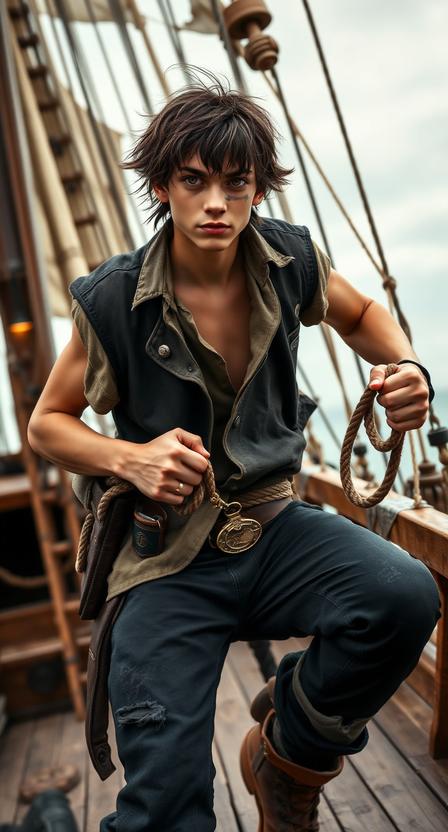
KAEL: The Punkish Young Crewman
Role: Deckhand, runner, rope-hand, troublemaker
Age: 16–18
Temperament: Sharp, restless, rebellious, fiercely loyal once trust is earned
Education: Street-learned rather than trained, intuitive rather than technical
Voice: Fast-paced, sarcastic, full of slang and bravado
Motivation: To be seen, to matter, to prove he’s more than a stray someone hauled aboard
Core Fear: Being abandoned again
Strengths: Quick-thinking, agile, brave in reckless ways
Weaknesses: Impulsive, emotional, gets in trouble due to pride.
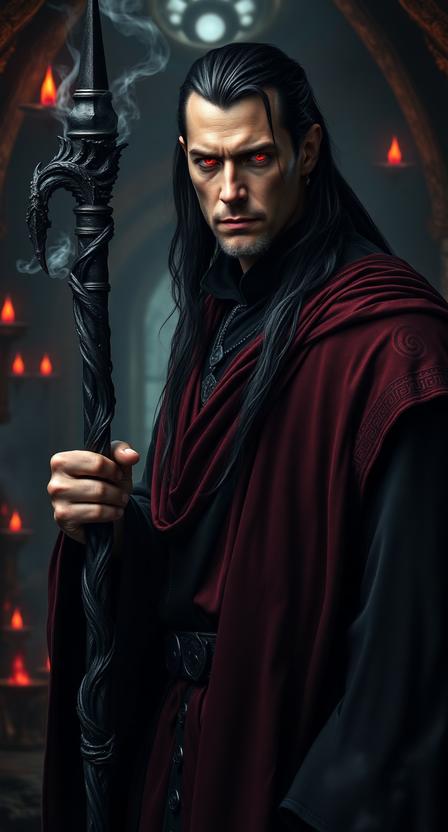
Malrik grew up in the lower tiers of Eldoria, far from its gleaming towers. His father served as a royal sorcerer but carried a fear he never named.
He spent his youth asking questions no one answered. Doors closed. Teachers dismissed him.
Somewhere in that cold silence, something cracked. Knowledge became hunger. Curiosity became obsession. The day he discovered the truth of the sealed armory, he convinced himself of a single belief: If the kingdom will not trust me with its secrets, then I will take them all.
Inside, he carries two truths he never admits: He once loved Eldoria deeply and still longs for it to acknowledge him. He fears being powerless the way his father was, broken by an unseen threat.
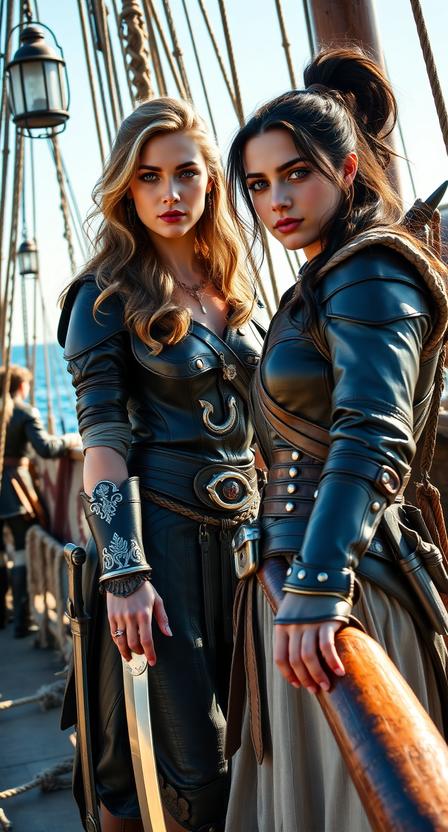
Name: Mira
Role: Quartermaster and deckhand aboard the Ardentis, occasional comic relief, moral anchor for the younger crew. Her childhood was filled with both humor and hardship; she learned to laugh to survive, and her humor is a shield for deeper empathy. Slender but strong, built for agility rather than brute strength. Sun-streaked brown hair usually tied back in a messy braid. Green-gray eyes that flick with curiosity and mischief. Wears practical clothing patched from many ports, often with a faded scarf or trinket from home.
Background: Born in a bustling port city, the daughter of a fisherman and a market trader. She learned the
value of both hard work and clever negotiation from an early age. Grew up watching sailors, merchants, and thieves alike, giving her a street-smart intuition about people. Briefly trained in navigation and ship repair by her father, but largely self-taught.

BACKGROUND
Elara was born beneath the highest tower of Eldoria, where the first dragons once circled at dawn.
From that day forward, the dragons watched her.
As a child, she walked freely among them. Their massive wings stirred the air around her, and the keepers whispered that the creatures moved with her shadow.
When the Ardentis took her aboard, she joined as an ordinary crewmate. She spoke little of her past. She never mentioned the glowing sigil beneath her wrist or the dreams that tore her awake
at night. She wanted anonymity. She wanted peace.
But Eldoria was already calling her name.
Conclusion
Kingdom Come is a sweeping, allegorical fantasy that blends myth, faith, and adventure. It stands out for its spiritual depth, evocative imagery, and commitment to exploring the eternal themes of calling, sacrifice, and restoration. The novel’s structure, symbolism, and character arcs are crafted to resonate with readers seeking both epic storytelling and profound meaning.